UX, technology and interface design in a third-world country
Our cultural differences and technological development play an important part in how we read the world and technology.

Writing in 2013 about design and technological development in a country labeled “third-world” is unsettling, especially since I am lucky enough to sit down and work with people who have seen a different picture, perhaps a cultural or a media one, of what the definition really means.
According to the intellectuals, third-worldism is a political doctrine, not a reality; for them it is a reality that is over. Intellectuals are like that: they have a strange fascination with living in realities simulated in their data, their analyses, their thoughts and their reading, forgetting, of course, what any passerby could see at a glance after visiting a developed country and coming back home. It does not matter how far extreme poverty rates have dropped, or how many, according to their numbers, no longer die of hunger –as if dying of hunger were something statistical, something anecdotal–, the difference is there, it is palpable and it is abysmal.
But how are the third world, the developed world and design related? Well, it turns out I found myself sharing the design of my new website with a group of users. To be more specific, the menu. The site’s menu was going to be hidden the same way the menus of Facebook, Instagram, Mailbox and a few other apps are: a side panel that appears when you click an icon. That action, the action of telling the menu to show itself, is triggered with a more than universal symbol in the lists of Interface Design (UI) and Experience Design (UX), the famous “hamburger.”
To my surprise –and it really was a surprise–, only I, in those first days, knew how to reach the menu. The people who saw the site were left with the idea that I had built a “one single page portfolio” that, strangely, did not show any portfolio! Even a couple of friends in the trade, perhaps more inclined toward editorial design, fell prey to that strange idea.
“Did you see the menu?” I would ask. “Does it work well in your browser?” After a silence:
“Oh, of course,” they would say, “now I see it.”
What does this have to do with the third world? It is very simple. Most of us, designers with several years of experience in the world of technology, see these concepts, trends and media directions, and relate to them from a working perspective that, invariably, ends up being an influx of the cultural expressions of the places where those advances come from. To give an example, I have had several clients in the United States whose taste for the aesthetic (let us call that the set of actions that make a message simple, functional and attractive) differs enormously from that of traditional clients in Latin America. In other words, they lack any sense of beauty; the functional completely replaces the attractive. It is not so with Latin culture, for which beauty has to be not only opulent but also take precedence over the functional. Hence the fact that I write so much to dress up things I could say in one really simple sentence. This apparent inability to be simple comes from an even bigger trait, the little analytical exercise that develops in the cultures that “follow” or “emulate” the avant-garde, because where there is no value of our own in development and research, our production is almost nil. We devote ourselves to copying and continuing the legacy of what works, what we call the “mainstream.”
Whose mistake was it? That was my question. I am designing for the people who will potentially see my work, whether to get to know it, hire me, recommend me or criticize me. That is, these people are not necessarily connected to technology the way I am. Their relationship with their phones, their computers, the internet, with the interface, the way they relate to visual elements of communication and interaction, is radically different from mine. And if they, the people my site is meant for, do not understand how to navigate it, I can say the website fails in its most relevant aspect.
The clearer a message, the easier it is to understand, the more elaborate the psychological construct, the more “reality” backs it up and makes it true for us.
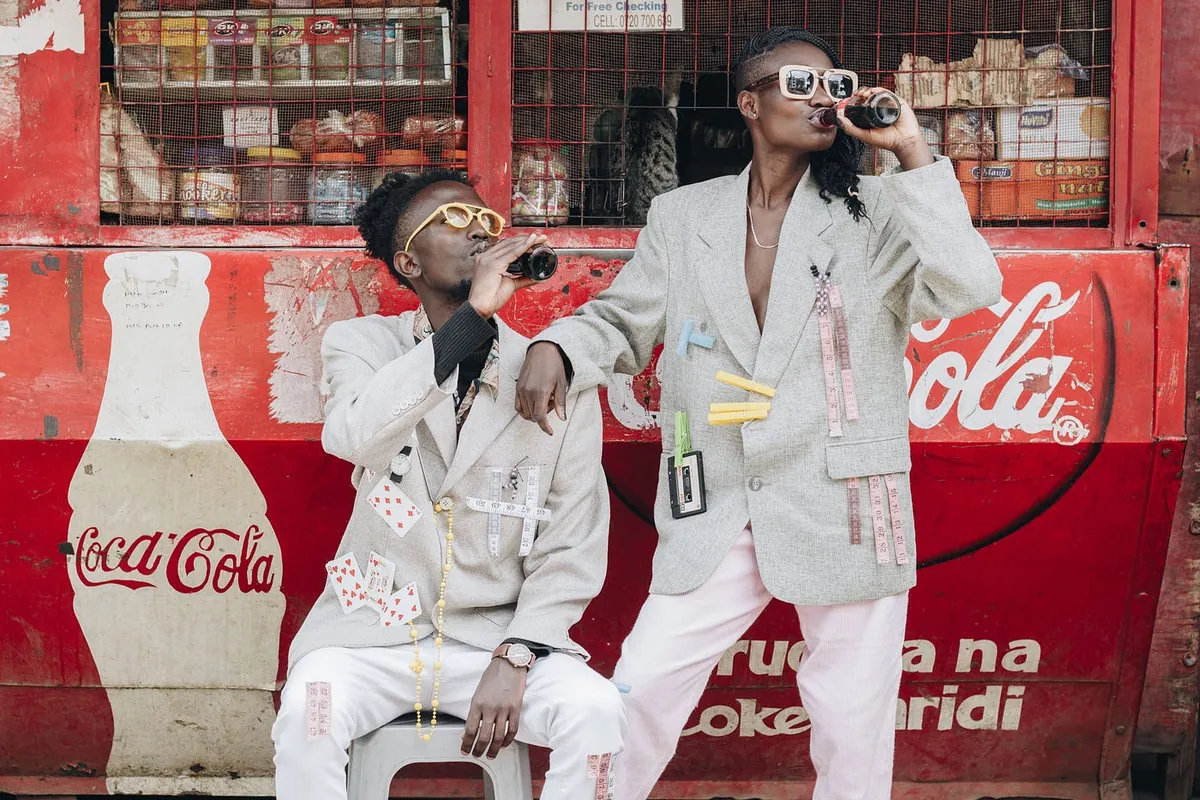
I will not say I cried; we designers have a reputation for being sensitive creatures. The truth is that, working with constant feedback and big clients, the first thing you have to learn is to detach from the work the way an artist does from a piece in the eternal task of correcting it. That is, the more criticism a design gets, the better it is built, since it is, after all, a system that represents certain semantic fields on which a group of people has already reached a prior agreement. Let us look at this concept more deeply. Perfumes do not turn to the graphic concepts of seduction for no reason; there is a reason behind it: smells, their role in the chemistry of romance, what that means biologically for us. A foundation is built on that, a silent acceptance of a commercial truth. It becomes a group of images that all denote the same concept. Perfume is ethereal, weightless, it has a heavenly connotation, the muse must appear, the muscled man like a Greek god, symmetry, fluidity, fabrics, wind, elegance, and so on. Effectiveness is measured, of course, by how clean the filter of those arrangements is. The clearer the message, the easier it is to understand, the more elaborate the psychological construct, the more “reality” backs it up and makes it true for us. Another simple example that illustrates this idea is Coca-Cola. We all know how harmful it is. It has no nutritional value at all. And yet there is not a single home in the world where the association of family gathering, thirst, the feeling of belonging, the joy of feeling welcome, that vigor you get in the company of kindred people, relatives or friends, does not include a table with a cold bottle of Coca-Cola. It does not matter that there are millions in the world who do not drink it, it does not matter that there are people whose lives stay completely away from the drink. The idea has taken root, it has been shared, accepted, it is real. We accept that Coca-Cola is one of the biggest brands in the world. Its economy is literally an empire built on selling a joy, one scientifically proven to be harmful. Do we reason about this when we drink it? No, it would make no sense. We simply enjoy it; there lies the achievement.
So I kept testing the navigation with another group of users. The data started to split. Obviously, every person I work with reached the menu immediately, without any trouble. Here begins my journey toward the article itself, because at the prototype stage the site was really aimed more at designers, people in the field and possible startups that might be looking for designers in the future. But in building it, I also could not leave out all the other people who did not belong to the circle of technology and design.
Any interface designer would tell me that a simple indicator alerting the user to the navigation could solve this problem; which is true. But the failure of my navigation led me to question the subject, together with a group of collaborators, in the following way:

In Seoul, South Korea, in 2011, Tesco started a program to expand its stores –the company is the second largest in that country, with stores (supermarkets) in several cities–. The program consisted of installing, in train stations, virtual aisles with photos of the products, lighting and a QR code for each product, emulating their counterpart in physical supermarkets. Soft drinks, meat, dairy and the rest, all on a big poster protected by glass and set into the walls where hundreds and thousands of people walk every day.
People got off the train, took out their smartphone, the phone read the code of the product they wanted, an app guided them through the purchase process and the product was delivered to their home. Easy, right? Pretty easy, pretty simple. In fact, I think it is one of the best uses of QR codes I have seen so far (a lie, the use of QR codes that Bancolombia implemented in its Nequi app, in 2020, beats them).
These people have a different work culture. Little time to go shopping at a store and a very strong, competitive economy. According to 2013 data they are the 13th largest economy in the world (by GDP and PPP) and are classified as a developed country by the UN, the World Bank and the International Monetary Fund (IMF). They are also among the most technologically advanced and best connected countries; it is the third country with the most broadband internet users among OECD countries, and also one of the global leaders in the production of electronic devices, semiconductors and mobile phones.
Infrastructure, economy and development are a powerful combination. The exercise was a complete success. Tesco managed to expand its coverage with stores that did not require much investment. The profits were positive. I do not know whether these stores still exist today. In any case, they were and are an example of success. After seeing this, my thought was to create something similar here, in Latin America. In that meeting with the group of developers and friends, the conclusion was: at least here, in Colombia, people are not ready for this. I looked at my site, I thought about the menu, I thought about my users. “It is true,” I said. Two days later, with a cool head, I realized. If we are not ready for something like this, at the very least we have to get ready.
Silicon Valley is not a physical place, Silicon Valley is a set of elements that work very well: money, talent, infrastructure.
The first step to being ready is to stop thinking about Bogotá, Lima, Buenos Aires; we have to think about Latin America. Not for an ideological reason, but because knowledge always develops by “pivoting” on previous knowledge. That is how science is made, essays are written on the basis of other essays, of other research. Results are reviewed, duplicated, and then a base is set on which to continue. That is how knowledge is created. And if a single Latin American country is too small or too biased to stand out, a group of countries can help overcome those limits. The second step would be to stop believing in the myths of the tech entrepreneur, like the one that says Silicon Valley is a physical place, when Silicon Valley is a set of elements that work very well. Money, talent, infrastructure… something like South Korea. I say this about Silicon Valley because, as @freddier mentioned last Thursday on #mejorandola (now Platzi), there is the mistaken belief that good ideas are only produced there. Bogotá does not have all of this, but Latin America does. Already, this very year (2013), there are cases of this kind of thinking, of this quality of products and services, happening in our territories. Here are a few:
- Mejorando.la (now Platzi): my main source of information and learning, an international community of internet people making the internet.
- WeHostels: an app that competes in the Airbnb market, finding hostels and lodgings for people who want something different from the Hilton.
- Apps.co: an initiative of the Colombian government to encourage the creation of mobile apps; like this one, there are several in other countries.
- ManGo: a Colombian app for sales and business managers.
There are many, many more developments like these that I do not even know about. So, going back to the premise of the article, going back to that meeting, to my menu and to Tesco, writing, speaking and creating in the field of design and technological development on this continent is not really a problem, it is a bet on something big. A possibility that grows day by day; it only depends on us being awake and attentive enough to stay ready, ready to turn an unlikely scenario, in beta, into a great opportunity for expansion and growth. To not only write or talk about it, but to create from it, and so keep spreading the development of our own culture.
Update, 2020. Now, seven years and a pandemic after writing this article, reality is different. There is no escape any more, no excuse; the virtual is part of our lives even in developing countries, which, in itself, shows the potential of technology and how quickly it has become part of everyday life.
Maybe this deserves a new article, will it? Maybe a sequel. We shall see.